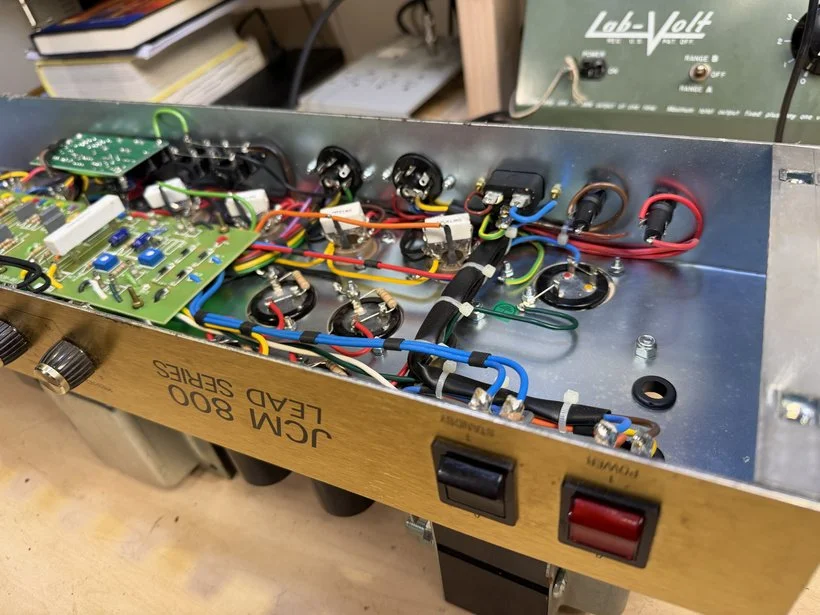
Alright, we are back at it after the holiday break with a Marshall JCM800 2203 (100W) reissue amp that is on the bench for a pre-purchase inspection.
This amp has been sitting for quite awhile and the potential buyer is hoping to have an estimate of what it would take to be a fully operational studio/gigging monster of an amp.
What we know going in is that the amp has a power switch that needs to be wiggled in order to get the internal light to come on, the low gain input jack does NOT pass signal, and the amp seemed quiet to the potential buyer when he was testing it. He stated that it was surprisingly quiet for a 100W amp and seemed like it wasn't even as loud as his 50W Fender Bassman when pushed.
Another clue that there is in fact an issue is that he could NOT get a clean signal out of the thing no matter what. This usually points to there being either a problematic tube or screen resistor in a push-pull amp circuit.
Annnnnnd that is exactly what I found. In the picture below the circled resistor is a 2W metal oxide 1 Ohm resistor. This resistor connects the cathode of both power tubes on this side of the amp to ground as a means of allowing for easier bias adjustments without having to use a specialized tool or measure the bias using the output transformer method. HOWEVER, it also creates an issue where if a tube fails short and then causes this resistor to fail open we will no longer have conduction of the two tubes on this side of the amp chassis which is exactly what happened here. Problem number one!
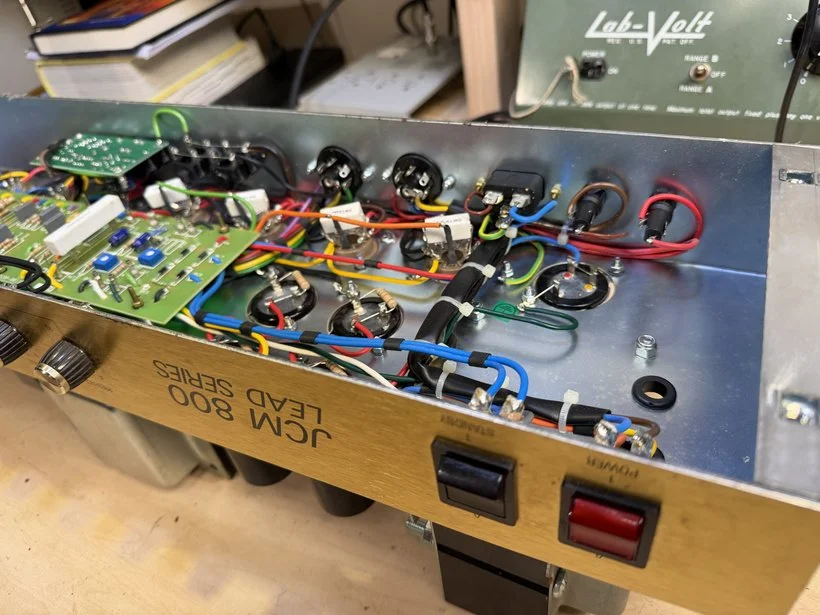
The second issue that came up is that the Low Gain input jack simply does not have a connection to ground for the sleeve of the input cable when it is plugged in. This should be quick enough to solve but is a bit of a mystery as to how it became this way since there doesn't appear to be damage to that area.
The third issue is the tubes. One power tube had its plastic keyway completely break off as I was removing it (or was already broken and I just removed the tube from the socket and found it. While a second power tube tested on my tube tester as having a major vacuum leak.
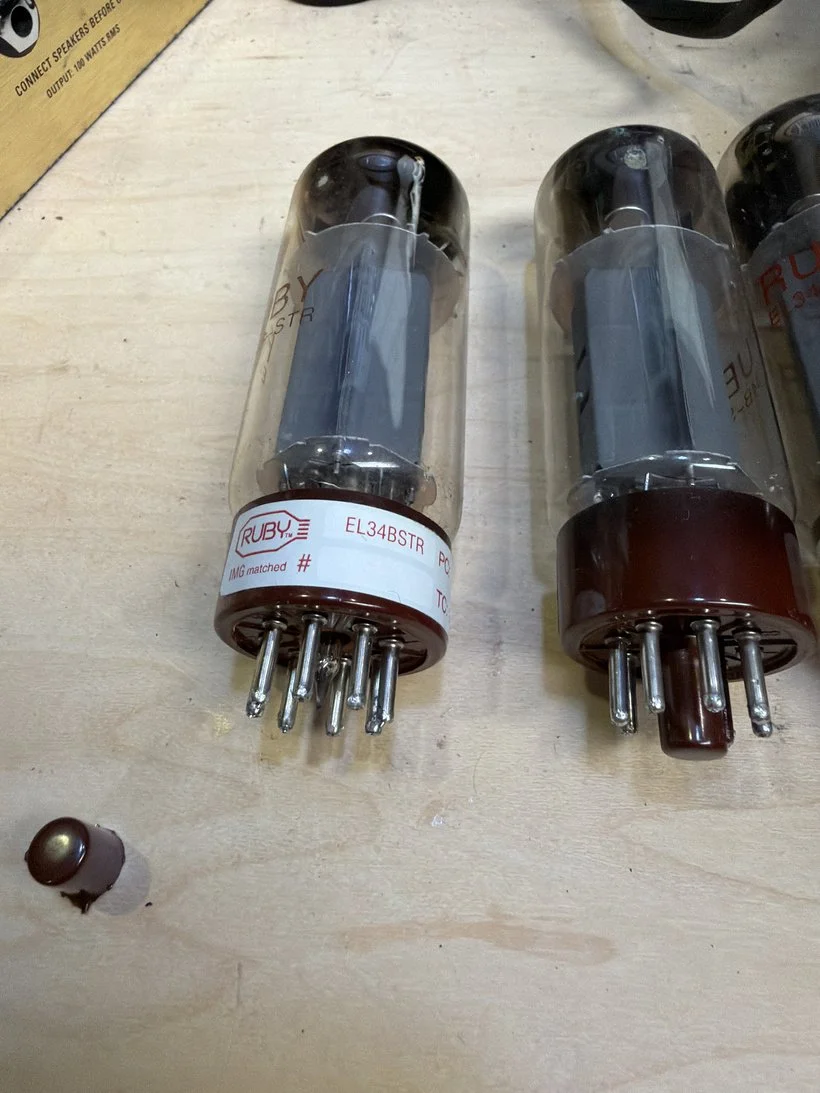
Luckily these are all easy enough issues to fix. The largest cost to the buyer will be the new quad of power tubes (or pair if they can find one with a close enough transconductance to the remaining two good tubes). But at this point I would most likely only need to charge my minimum or potentially 1.5 hours of labor if any other surprises pop up while I am in there. Overall this seems like a good buy to me, but that being said, it is not my amp to buy!