Alright, we are BACK in this barn find black panel Super Reverb to finish up everything that was left to do.
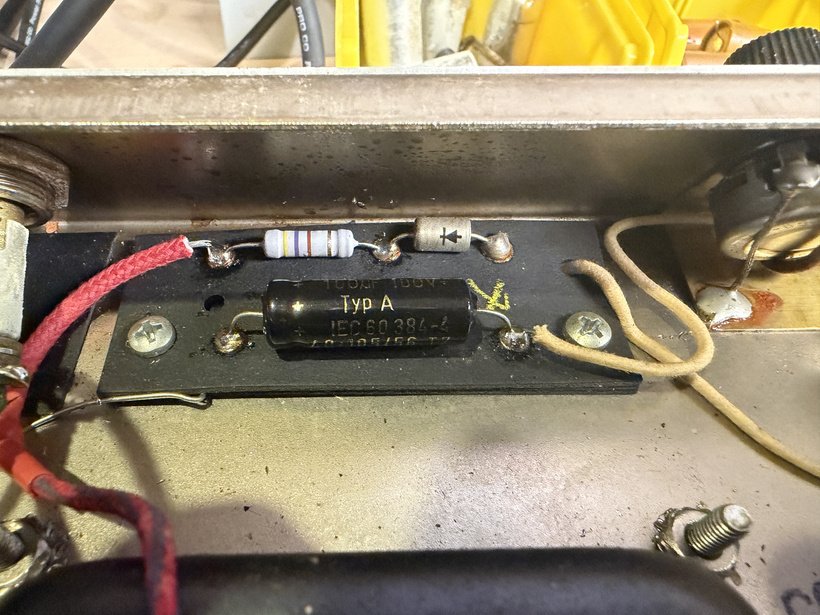
We will cover, cleaning tube sockets, cleaning pots, cleaning the pots AGAIN (they were very dirty), replacing all other electrolytic caps in the amplifier (cathode bypass caps, bias cap), rebuilding the bias board, replacing the screen resistors, adding in some hardware that was missing, checking bias, and finally ending with fixing the tremolo circuit.
This one really took some extra thought to ensure that we got it as stable as possible while still ensuring that the amp is usable as a gigging amp. Part of that meant not doing some things that I would have done if it was a personal amp or one that had been butchered by someone else already and just needed to be a workhorse.
In this amp that meant getting it as quiet as possible, while still changing as little as possible. Some things like plate resistors, wiring for the tremolo and reverb circuit, grid resistors, etc. were left stock. I have told the customer to take it, and play it as is and to bring it back if he decides he would like to go further with it or is unsatisfied with the sound after the basic overhaul service. Even without those changes this is a VERY good and clean sounding amp. It could just get that extra 5% better with some more tweaks here and there.
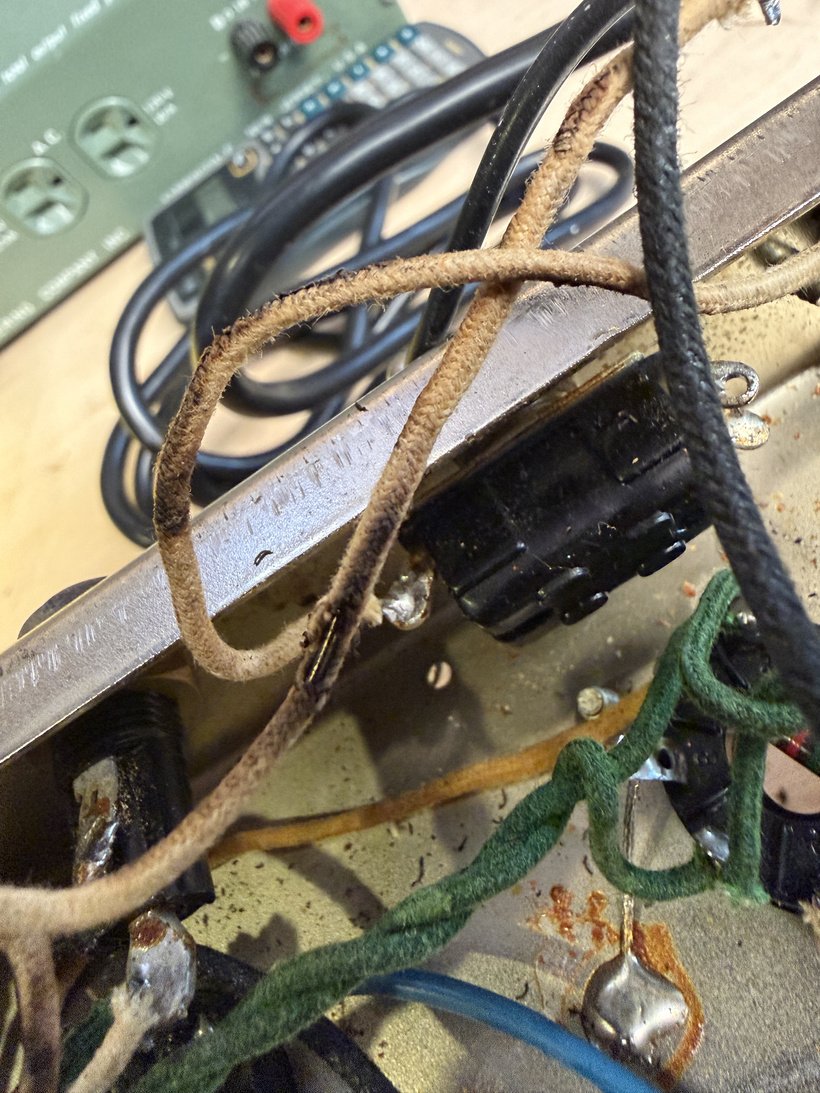
One thing I didn't anticipate, but that was a clue that someone else HAD been in this amp before is the scorched wiring for the 120V AC power coming into the amp! I ended up having to pull all of the wiring for this section while adding in the new 3-Prong power cable.
I believe this is further evidence that at some point there was a catastrophic fault that led to a power transformer failure, which would explain why the power transformer has a date code that is one year later than all other date codes in the amp:
So for this week's lesson on something a bit more in-depth, let's talk tremolo ticking. When a tremolo circuit has failed there are few different clues that can come with it. In this case the tremolo was not working at all. First step in that case is to swap out the tube for the oscillator which is a 12AX7 tube located in position V5 :
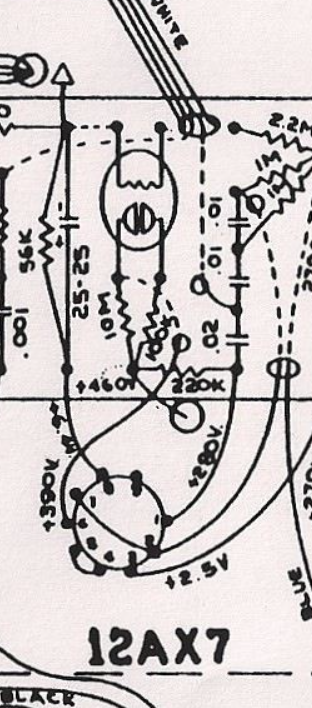
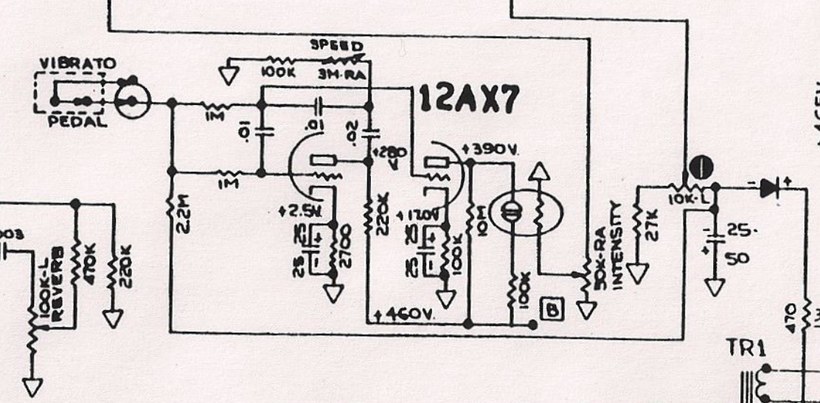
In this case, that fixed it! No problems! If it hadn't fixed the issue, the next step would be to swap out the optocoupler, which is the sometimes called a "roach" or "bug" since it is a little black blob of heat-shrink tubing with four legs sticking out of it. This device is a neon bulb that blinks on/off at whatever rate the oscillator is oscillating at. That light then hits an enclosed LDR (Light Dependent Resistor) which changes its resistance from very high to very low in response. That changing resistance basically acts like a gate opening and closing for your signal. When the gate is open (low resistance) your signal is shunted to ground. When the gate is closed (high resistance) your signal sees no path to ground other than through the speaker and we get sound. And that is how we get a warm warmly goodness of a Fender Tremolo in these amps!
In this case we were still left with some ticking from the oscillator circuit. This can be caused by lead dress. Making sure that the wires from plate and grids of V5 and V4 aren't too close to each other can sometimes be enough to solve the issue. However, in this case the nuclear option was needed: we had to install a 0.01uF 600V film cap across on part of the optocoupler as shown here:
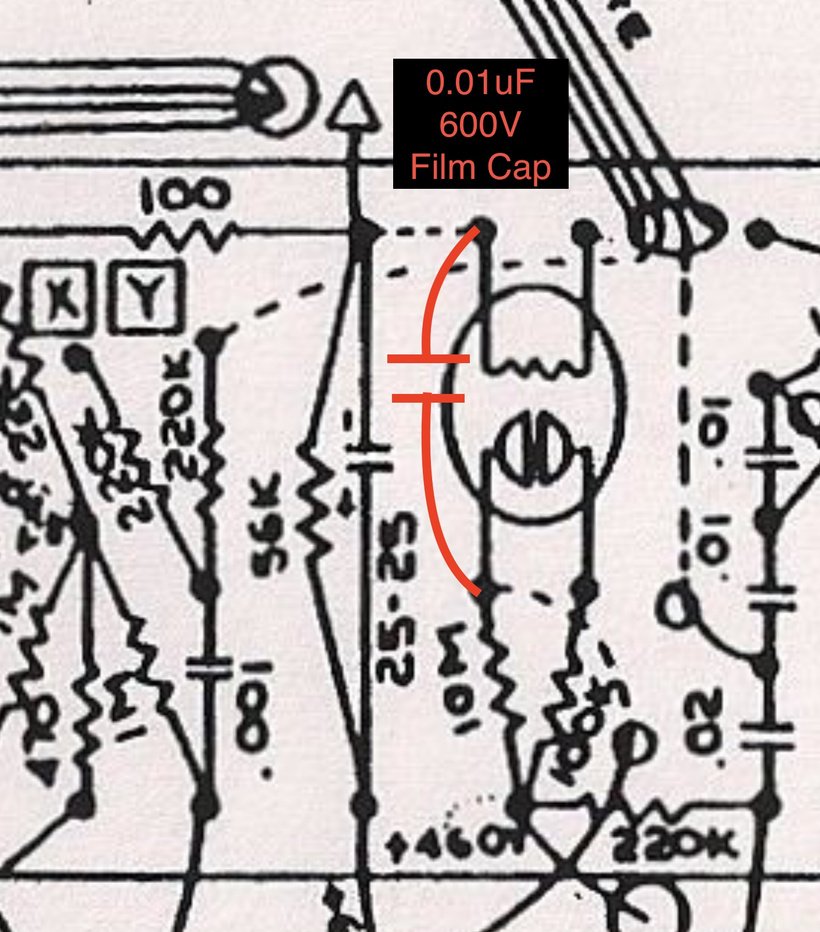
This basically stabilizes the 460V seen on one side of the neon bulb and allows any fluctuations in that voltage that could cause the ticking to instead be steady and will shunt any noise at our frequencies of interest to ground.
If this had NOT fixed it. The next steps would be to add some shielded wire from the oscillator tube to that same 10M ohm / neon bulb junction. But this requires pulling the board which can add a bit of labor cost, and in this case was unnecessary.